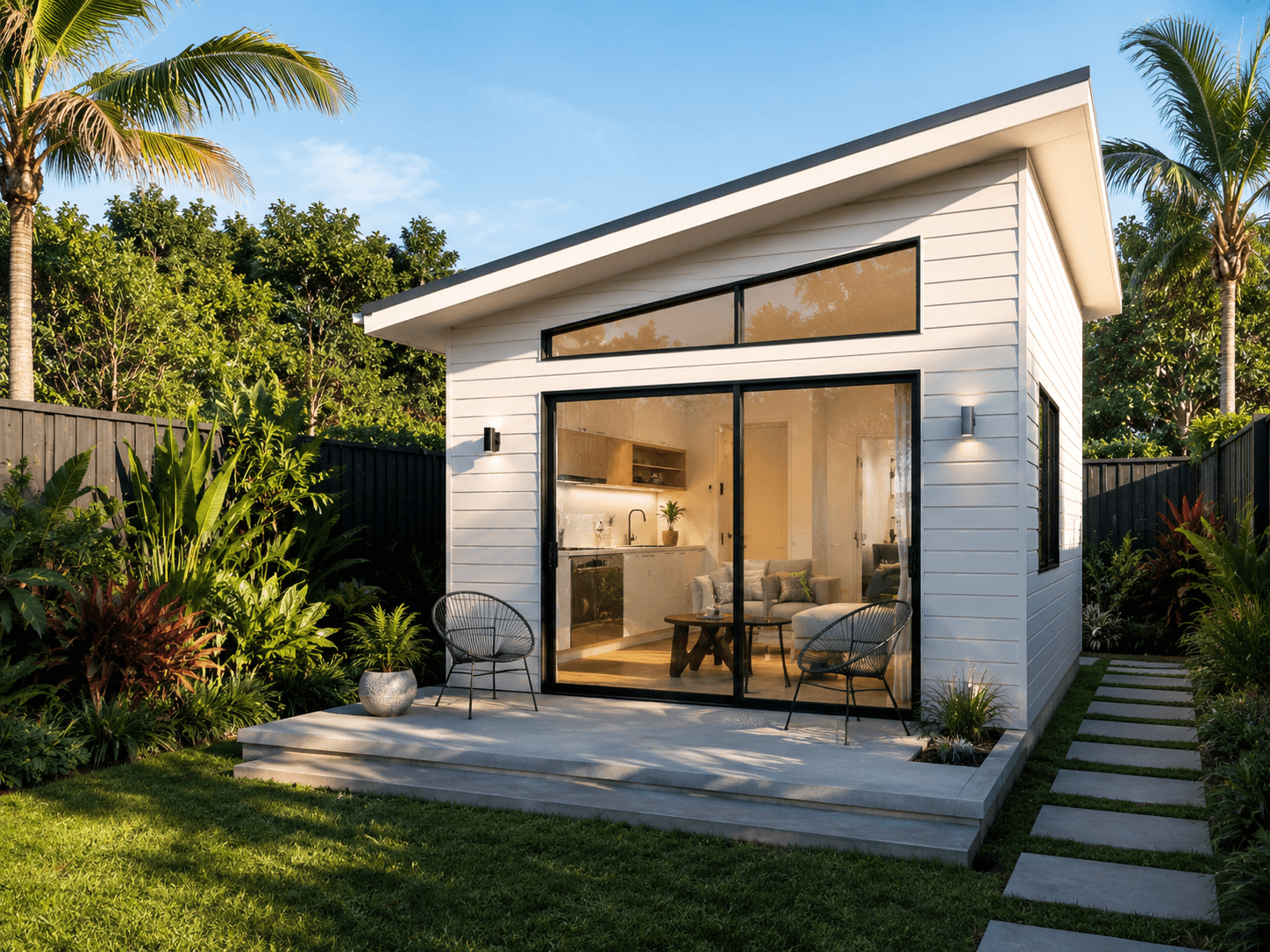
How Big Are Granny Flats? Size Guide & Maximum Limits
Understanding granny flat sizes is crucial when planning your secondary dwelling. Size affects everything from approval pathways and construction costs to livability and rental potential. This guide covers granny flat dimensions, maximum limits, and how to choose the right size for your needs.
What Is the Maximum Granny Flat Size?
Granny flat size limits vary between states and councils. In NSW, complying development limits secondary dwellings to 60m² internal floor area. Queensland councils typically allow larger granny flats, with many permitting up to 80m² depending on the local planning scheme.
These maximum sizes refer to internal floor area—the livable space inside the granny flat. External measurements including walls, verandahs, and carports may increase the overall footprint. Understanding how floor area is calculated helps you maximise usable space within size limits.
Granny Flat Size Limits by State
NSW Granny Flat Size Limits
New South Wales caps complying development granny flats at 60m² internal floor area. This limit applies to secondary dwellings approved under the State Environmental Planning Policy. Larger granny flats may be possible through development application, but 60m² remains the standard maximum for streamlined approval.
Queensland Granny Flat Size Limits
Queensland granny flat sizes are regulated by individual council planning schemes. Many South East Queensland councils allow secondary dwellings up to 80m², though some restrict sizes to 70m² or less. Brisbane, Gold Coast, and Sunshine Coast each have specific provisions worth checking before planning your granny flat.
Common Granny Flat Sizes and Configurations
Granny flats come in various sizes to suit different needs and budgets. Understanding common configurations helps you choose the right size for your situation.
40m² Studio Granny Flats
Compact 40m² granny flats suit single occupants or couples seeking efficient living spaces. These studio-style secondary dwellings typically feature open-plan living, a separate bathroom, and clever storage solutions. The smaller footprint means lower construction costs and minimal impact on your backyard.
Studio granny flats are popular for rental income, home offices, or guest accommodation. Contact us to discuss our range of compact designs.
50m² One-Bedroom Granny Flats
At 50m², granny flats can comfortably include a separate bedroom while maintaining generous living areas. This size suits singles, couples, or as a comfortable guest suite, with defined sleeping and living zones.
60m² Two-Bedroom Granny Flats
The 60m² size point is significant as it represents the NSW complying development maximum. Two-bedroom granny flats at this size offer genuine family accommodation with separate bedrooms, bathroom, kitchen, and living area — maximising every square metre for comfortable two-bedroom living.
70-80m² Three-Bedroom Granny Flats
Larger granny flats between 70m² and 80m² can accommodate three bedrooms, making them suitable for families or shared living arrangements. These secondary dwellings rival small houses in functionality and comfort.
Factors Affecting Granny Flat Size Choice
Choosing the right granny flat size involves balancing multiple factors. Consider these elements when determining your ideal secondary dwelling dimensions.
- Intended use: Rental income, family accommodation, home office, or guest suite
- Number of occupants: Singles, couples, or families need different space
- Available land: Your backyard size and shape constrain options
- Budget: Larger granny flats cost more to build
- Approval pathway: Staying under 60m² simplifies NSW approvals
- Future flexibility: Consider how needs might change over time
- Rental market: Local demand may favour certain sizes
How Granny Flat Size Affects Cost
Granny flat construction costs correlate with size, though not always linearly. Larger granny flats cost more overall but may offer better value per square metre due to fixed costs like site preparation, approvals, and utility connections being spread across more floor area.
As a rough guide, expect granny flat costs to range from $2,000-$3,000 per square metre depending on finishes and site conditions. A 40m² granny flat might cost $100,000-$120,000, while an 80m² design could reach $180,000-$240,000. Quality finishes and complex sites increase costs at any size.
Granny Flat Size and Rental Returns
Granny flat size significantly impacts rental income potential. Larger secondary dwellings command higher rents but also cost more to build. Finding the sweet spot depends on your local rental market and investment goals.
In many South East Queensland and Northern NSW markets, two-bedroom granny flats (50-60m²) offer the best balance of construction cost and rental return. Areas like Brisbane and the Gold Coast have strong rental demand. However, three-bedroom designs may suit areas with strong family rental demand. Research your local market before deciding on size.
Minimum Granny Flat Size Requirements
While maximum sizes get most attention, minimum requirements also apply. Granny flats must meet minimum room sizes and ceiling heights under the Building Code of Australia. Bedrooms require minimum floor areas, and living spaces must provide adequate room for furniture and movement.
Practically, granny flats smaller than 35-40m² struggle to include all necessary facilities comfortably. The smallest viable secondary dwelling typically includes a bedroom, bathroom, kitchenette, and small living area—difficult to achieve under 35m² while meeting building standards.
Making Small Granny Flats Feel Bigger
Clever design makes compact granny flats feel more spacious than their floor area suggests. Design strategies that maximise perceived space include:
- Open-plan layouts combining kitchen, dining, and living areas
- High ceilings or raked ceilings adding vertical space
- Large windows and glass doors connecting to outdoor areas
- Light colour schemes reflecting natural light
- Built-in storage reducing furniture needs
- Multi-functional furniture and spaces
- Outdoor living areas extending usable space
Not sure what size granny flat suits your property and needs? Our team can assess your site and recommend the ideal secondary dwelling size. Book a free consultation today.
Our Granny Flat Size Range
Universe Granny Flats offers designs from 40m² to 140m², covering every need from compact studios to spacious family homes. Our range includes:
- Studio (40m²): Efficient compact living
- One-bedroom (50m²): Comfortable single or couple designs
- Two-bedroom (60m²): Spacious layouts within NSW complying development limits
- Three-bedroom (70–80m²): Premium family living
Our full range of designs is coming soon. Contact us to discuss a custom design suited to your property and needs.
For a complete overview of compliance requirements, read our guide on granny flat rules and regulations.
Related Topics
Related Articles
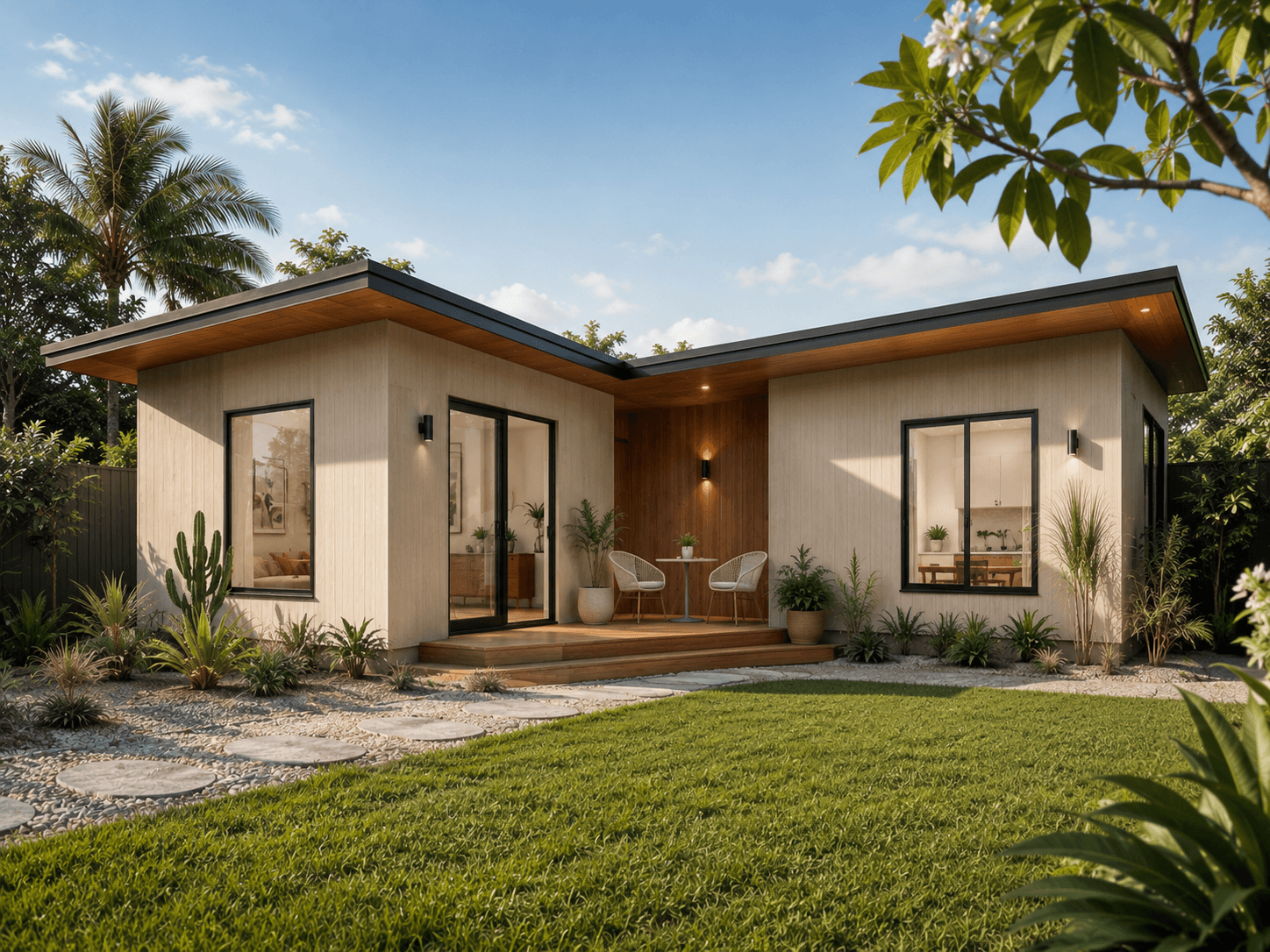
What Are Granny Flats? Complete Guide to Secondary Dwellings in Australia
Granny flats are self-contained secondary dwellings built on residential properties. Learn everything about these versatile compact homes and why they're popular across Australia.
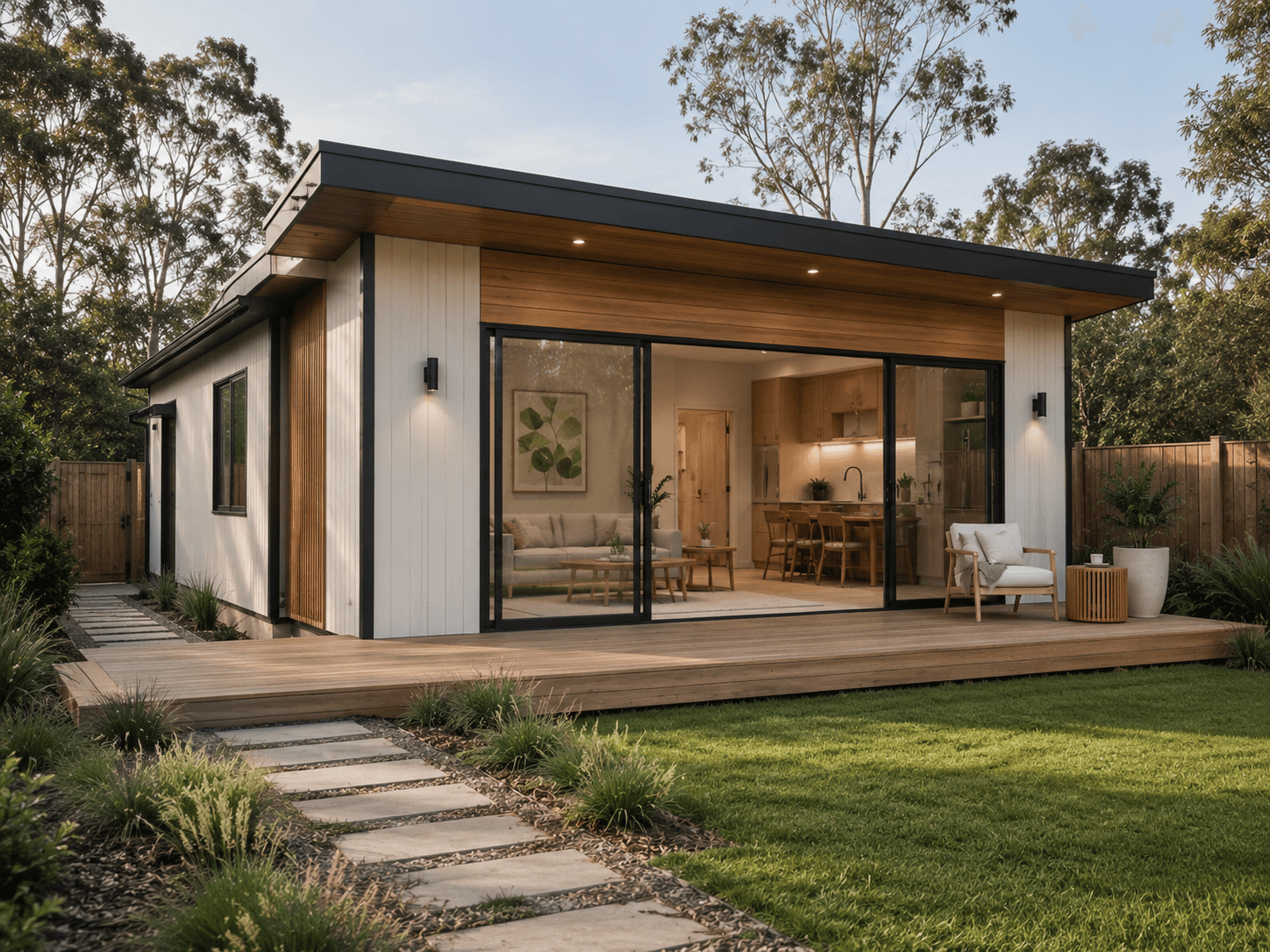
Granny Flat Rules & Regulations: Complete QLD & NSW Guide
Navigate granny flat regulations with confidence. This comprehensive guide covers all the rules for secondary dwellings in Queensland and NSW, from setbacks to parking requirements.
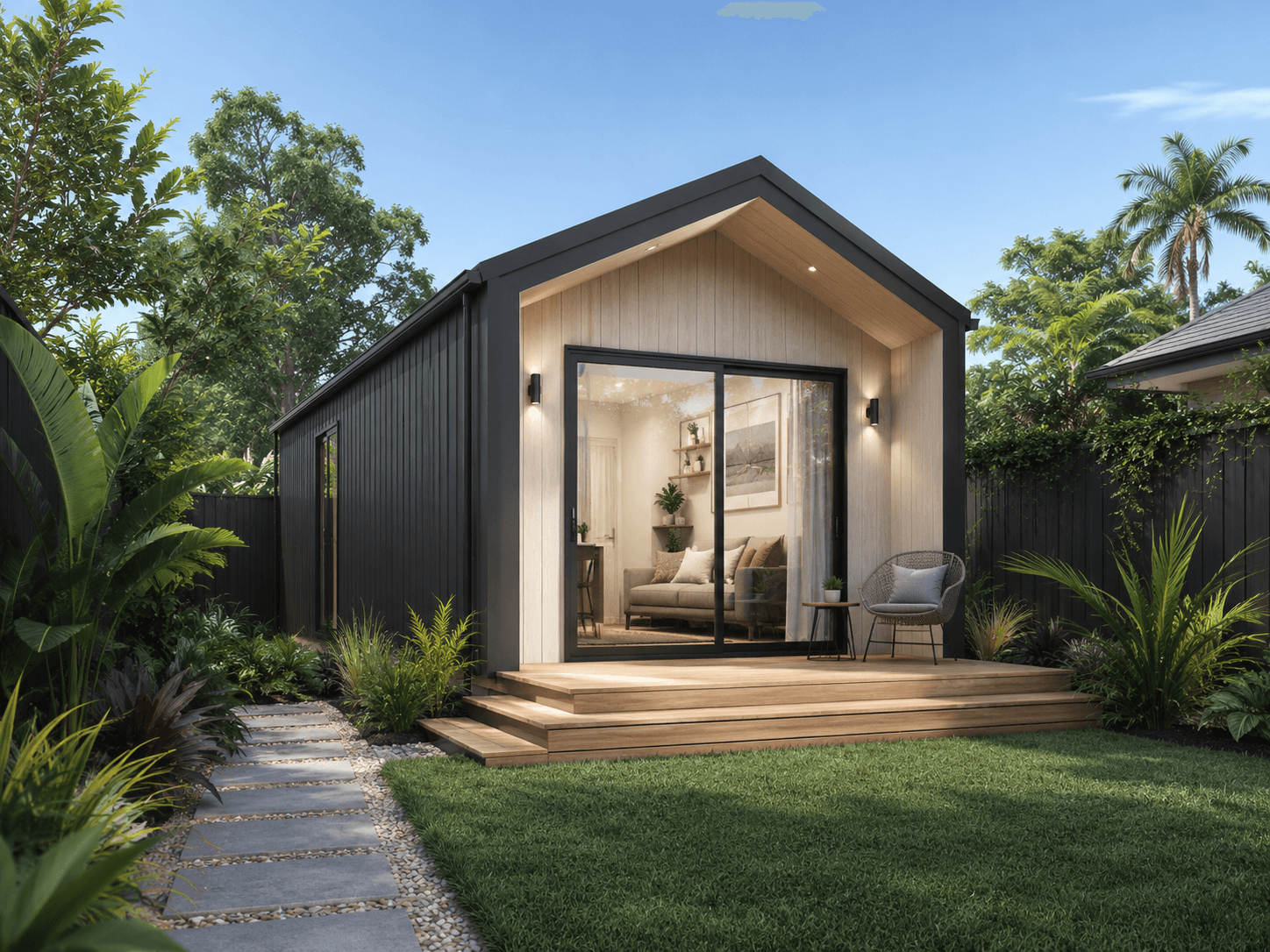
How Many Granny Flats Can You Have on a Property? Rules Explained
Wondering if you can build multiple granny flats on your property? Understand the regulations around secondary dwelling numbers and explore alternatives like dual occupancy.
Ready to Start Your Granny Flat Project?
Get expert guidance from our team. We handle everything from design to approvals to construction.